Skip to content
Light coloured laminate flooring on stairs.

The Ultimate Guide to Installing Laminate Stairs

Light coloured laminate flooring on stairs.

Staircases are among the busiest areas of the home, enduring daily foot traffic that can quickly wear down less durable materials. If you're looking for a long-lasting, low-maintenance flooring solution that doesn’t compromise on style, laminate is a fantastic choice.

Laminate flooring is engineered from multiple layers, including a hard-wearing protective surface, a high-resolution printed layer that mimics the look of wood, stone, or tile, and a dense fibreboard core for strength and stability. This multi-layered construction makes it exceptionally resilient, scratch-resistant, and easy to keep clean, ideal for busy households and pet owners.

Many laminate products are also DIY-friendly, allowing you to achieve a stylish staircase upgrade without the need for professional installation. In this guide, we’ll walk you through the process of installing laminate on stairs, with practical tips to help you get it right the first time.

How to Install Laminate Flooring on Stairs

Laminate flooring can be fitted in almost any place you want hardwood flooring, and stairs are no exception. Though not quite as simple as laying on floors, it is easy enough to do for those with the know-how.

As with all types of flooring for stairs, laminate has its own specific needs:

  1. Start by preparing the surface of your stairs, making sure all is clean and clear, and ready for your chosen laminate.

Top tip: Be sure to order roughly 10% more laminate than you need, so you are sure to have plenty to cover the surface of your stairs.

  1. Let your pieces of laminate settle into the climate of your home. Set them aside for about 2 days before you plan to install them, to give the materials time to expand or retract accordingly, before they are fitted and at risk of damage.
  1. Before installing the laminate, make sure you have removed any leftover carpeting and tacks from the stairs. Wear protective gloves while you do this to prevent injury. If the stairs are already carpet-free, you can still prep them by clearing any excess paint and fixing any damaged steps, making sure they are primed and ready for laminating.
  1. Next, you want to remove areas where your stair nosing might be overhanging. This is common with most nosing, but it should be easy enough to cut away. You can do so using a jigsaw, then, after the excess nosing has been removed, use a chisel to make sure the area is flush against the riser. If you do not have access to power tools or do not wish to cut your existing stairs, you can alternatively fit pre-cut pieces of plywood to the underside of the overhang, as a way of filling the gap.
Man cutting laminate floor planks to size.
  1. Now is the time to cut your laminate to size. You will need to carefully and precisely cut the treads, risers, and nosings to the appropriate length

Top tip: Mark your laminate pieces with letters or numbers so you do not lose track of which section fits where.

  1. Finally, we can begin the installation process. The most effective way to go about fitting your laminate flooring is to work your way from the top of your stairs to the bottom. This way, you can make sure you are not stepping on newly fixed pieces that are not properly dry, and you also prevent being stuck upstairs once the laminate is installed.
  1. Start by installing the treads, these are the main surface of each step and are, fittingly named, the place you tread. To fit the laminate treads, make sure the underside is a decent helping of wood glue, and then place them on the tread surface. Keep an eye out for glue seepage and be sure to clean it up the moment you spot it.
  1. Next, fix the risers into place, again with a decent spread of wood glue. The risers are the near-vertical parts of a staircase and are fitted right below the treads. Keep them in place for a few seconds or support them with small pieces of plywood while they dry.

Top tip: In order to ensure a securely stuck riser, using an electric screwdriver or nail gun, screw or nail the riser along the top edge, right along the tread line , where they will be later concealed when you fit the nosing.

  1. Now you can install your laminate stair nosing. Also referred to as stair edging, this piece slots above the meeting place of the tread and riser. Apply your wood glue along the top edge of the riser, rather than the nosing itself, and then carefully stick the nosing strip in place (over any screws you may have added to the riser to hold it in place).
  1. When it comes to ordering of importance, it is entirely your call whether you want to install all of your treads and risers first and then add the nosing, or if you want to go step by step, all the way down.

Important Final Steps

  • Once your new laminate flooring is fitted, you can now fill any and all leftover nail or screw holes using putty. Apply using a putty knife. After a few minutes, use a damp cloth to smooth out the putty before it has dried.
  • Be sure to clean your stairs once the laminate flooring has been installed, so no residue or mess dries permanently to the fresh surfaces.
  • Finally, and most importantly, do not use the stairs for at least 12 hours but ideally 24 hours, after the laminate has been installed. After such time, all the wood glue should be dry, and the laminate should have settled firmly into place.
Wooden laminate stairs.

Around a Stair Spindle

The stair spindle is the railing of the staircase and can be a tricky place to install laminate. The easiest way to go about it is to remove the spindles beforehand and then refit them once the laminate flooring has been fitted. Where that is not possible, you will need to cut the laminate carefully so it will fit around the spindles seamlessly.

A handy way of going about this, so you do not waste time, is to measure out and pre-cut pieces of cardboard in the place of the laminate, so that when it comes time to cut it you can use the cardboard as a guide.

On Bullnose Stairs

Bullnose stairs are rounded and often feature on the landing step/s. Installing laminate flooring here is possible, but again, trickier, as you will need to cut rounded edges into your pieces of laminate, which you will have to do with a jigsaw or something similar. Be sure to wear protective gloves and goggles if you do this.

On Stairs Without Nosing

When installing laminate flooring on stairs, you will always need to include nosing , not only because of the way the treads and risers fit together but also as a matter of safety. The nosing of any stair is where most people put their weight when using the stairs. So this added reinforcement will help to maintain your stairs and keep you safe.

How to Make Laminate Stairs Less Slippery

Laminate flooring for stairs, though very durable, can be quite slippery in comparison to actual wood or other materials. But there are ways to make your laminate stairs less slippery, and prevent accidents as a result.

  • Keep your stairs clean: Oily residue can build up naturally over time, and it is important that you keep the laminate on your stairs clean to prevent slippery substances from persisting. Dust the space and hoover thoroughly, and then using a cleaning mixture consisting of 1 cup of vinegar and 2 cups of water, mop the stairs. Afterwards, be sure to dry mop each step to clear away any spills.
  • Anti-Slip sprays and coatings: There are products on the market that can help to keep your laminate non-slip. Coat the stairs with your chosen product, whether a spray or coating and be sure to leave to dry adequately between applications (overnight if possible).
  • Opt for safer footwear: When moving around the house and using the stairs, try to wear suitable footwear, avoid wearing socks or shoes with pointed heels and instead choose trainers or slippers with rubber soles.
  • Stair runners: Probably the best method to keep your laminate floors from being too slippery. A carpet runner can not only improve the overall look of your staircase, but it also acts as the best Anti-Slip solution. Here at Stair Rods Direct, we have an extensive range of stair rods to keep your runners snag-free and looking gorgeous.

How Much Does It Cost to Install Laminate on Stairs?

The cost of your laminate will depend entirely on the type you go for, the quality, and the supplier. Most wood-effect laminates start at an average of about £16 per square metre and can cost up to £50 per square metre. Overall, laminate is much cheaper than hardwoods, making it a budget-friendly choice. 

Laminate Stair Nosing

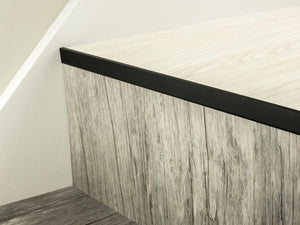
Stair nosing is a vital finishing touch when installing laminate on stairs. Designed to protect the edges of each step, it bridges the join between the tread and riser for a safe, smooth transition. More than just a functional element, stair nosing enhances the overall look of your staircase by giving it a clean, professional edge. It also improves safety by providing a slip-resistant surface and reinforcing the most heavily used part of each step. Available in matching styles and finishes, metal or laminate stair nosings ensure your staircase looks seamless while standing up to daily wear and tear with ease.

Explore our range of high-quality stair nosing for laminate floors.

Can You Put a Carpet Runner on Laminate Flooring?

Yes, you can add a carpet runner to stairs with laminate flooring, and it’s a practical way to improve grip and comfort. Start by making sure the laminate is clean and dust-free. The runner can be secured using a combination of staples and double-sided carpet tape—apply the tape to hold it in place while stapling along the edges and under the stair nosing for extra security. Take care to use staples that won’t split the laminate. You can also finish the look with stair rods

Carpet runner and stair rods on laminate stairs.
Customer photo.

Can You Put Stair Rods on Laminate Flooring?

Yes, you can add stair rods to laminate flooring, and they’re a great way to finish off a carpet runner on laminate stairs. To avoid damaging or splitting the laminate, always pre-drill pilot holes before screwing in the brackets. Use a low-speed drill and take care not to overtighten. If you’re unsure, opt for self-adhesive brackets or consult a professional.

Upgrade Your Laminate Stairs 

Laminate stairs are a practical and stylish choice, and with the right finishing touches, they can become a true feature in your home. Whether you’re adding a runner or simply refining the look, stair rods bring elegance and character. Browse our collection today to upgrade your laminate stairs in style.
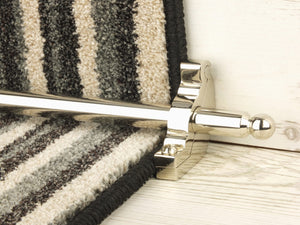
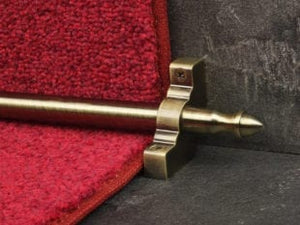
Explore Stair Rods

Previous article Stair Rods in Period Homes: Preserving the Past